Kurdish nomad tent in Armenia, 1936
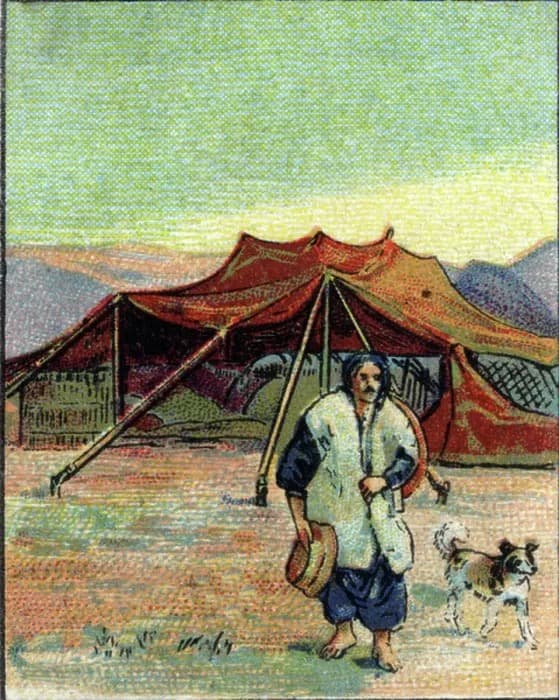
This image is a 1936 chromolithograph: a Kurdish nomad tent in Armenia (in the period framing, lands also linked with Turkey). The artist is unknown; the work is held in a private collection and catalogued through Stefano Bianchetti / Bridgeman Images.
Why this pain
For us, this is not only a “beautiful print.”
In one frame you can see reşmal life — in Kurdish, literally the black house, the name for the black tent of the nomads: tent, earth, sky, and a household that lives by the road and the zozan (summer pastures). In the same frame there is also something harder — the pain of nomadism: load, distance, borders, and a life always close to loss.
For families like Berzeri — a babik of the Miran (Kocher Miran) — this is not remote history. It is the memory of a way of living that still runs through our name, our language, and our family tree: from the high pastures to Kocer / Derik, and the villages along the border.
The tent as home
A tent is not only a temporary shelter. It is a home on the move:
- a place to sleep and break bread
- shade for children
- the thin wall between family and the world
Looking at this picture, you do not only see cloth and poles. You see the weight of a life — carried together by women, men, and children.
Names we do not know
We do not know the names of everyone under that tent. We do not know whether that night was gentle or heavy. We do know that nomad life — with all its beauty and all its pain — is part of our history.
Source
- Original title: Kurdish nomad tent in Armenia. 1936 (chromo)
- Artist: Unknown Artist (20th century)
- Credit: Stefano Bianchetti · Bridgeman Images / Fine Art Finder
- Media ID: 50292681
- Year: 1936 · technique: chromolithography
This post is for remembrance. If you have another image, name, or family story to add — share it with us.